Every itinerary I build treats sleep as a piece of logistics rather than as luck, because the trips that go wrong are almost never the ones with too little to do. They are the ones where three late nights stack up and day four turns into a negotiation.
The habits below assume an ordinary week of travel rather than an ideal one: one long transfer day, one afternoon with too much in it, and one dinner that ran late because the room was full. They cost nothing except being decided before the trip starts, which is the part families tell me they skipped.
Nine habits that protect sleep on a trip
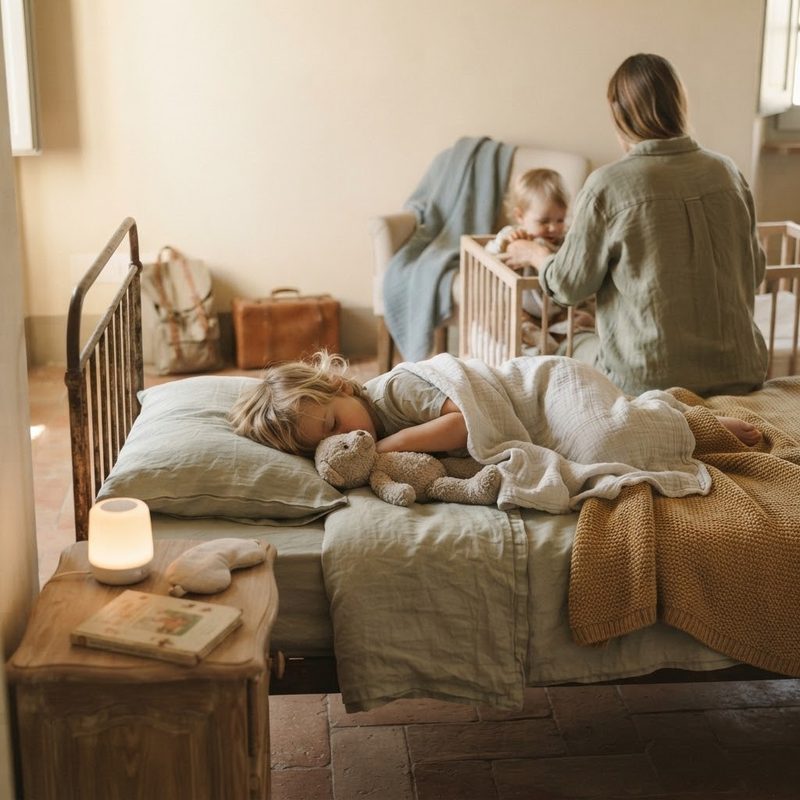
- Book the room around sleep first. Blackout curtains, a fridge for milk, a bathroom everyone can reach in the dark, and a bed configuration that means nobody sleeps on a sofa. I check these before I check the lobby photos, and I ask for a room away from the lift in writing.
- Keep landing day free. No paid activity, no restaurant worth dressing for, nothing with a start time. On international days we arrive, buy food, and go to bed, which costs a half day and saves the two days that follow it.
- Hold the bedtime hour. Local bedtime, give or take half an hour, rather than holiday bedtime. Late nights compound faster than missed naps do, and one 10pm night costs more than a skipped afternoon nap ever has.
- Shift bedtime before departure, not after arrival. For an eastward trip I move bedtime 30 to 60 minutes earlier for three nights before flying, plus an early wake-up. On a seven-hour change this buys roughly half the adjustment before the wheels even leave the ground.
- Know which nap survives travel. In my family the stroller nap survives anything and the car nap disappears the moment the car stops, so the stroller comes to the airport and gets used in the concourse. Test which version works for your children at home before you depend on it abroad.
- Carry the sleep cues from home. One flat sheet, one pillowcase, a white noise app that works offline. Familiar texture and steady sound have settled more first nights for us than any hotel ever has, and the whole kit weighs almost nothing.
- Eat properly before bed. A late dinner of plain carbs does not hold children until morning, so rooms get a small evening snack: yogurt, banana, peanut butter. Breakfast at 8am follows a 7:30 bedtime far better than it follows a 9:30 one.
- Alternate heavy and light days. One big outing followed by a pool or a park afternoon, never two heavy days together. The rhythm is what keeps the 8pm bedtime from turning into a battle, and it costs nothing except the discipline to leave something out.
- Plan the recovery night, not the perfect schedule. The first night away is the worst one, so I protect it: early arrival, quiet evening, nothing scheduled the next morning either. Once that night is safe, the rest of the trip runs on its own.
The first night, and what I expect from it
The first night away is the one I plan around rather than against. We arrive with food already in the room, we eat at a local hour, and we skip the restaurant entirely, because a 9pm dinner with children delays sleep twice: once at the table and once while everyone settles down afterward.
Bedtime keeps its usual order even when the clock says something different: bath, book, bed, in the same sequence we use at home, with the flat sheet and the white noise out of the suitcase. Lights go out at the normal hour for the destination rather than at the hour the day happened to end, and I expect one wake-up from the youngest traveler. It costs me twenty minutes and tells me nothing is broken.
What I do not do is put anything on the following morning. A late breakfast, a walk, a pool if there is one, and that is the whole plan. Two easy days at the front of a trip have carried every itinerary we built after them, while the reverse has never once worked for us.
What I would do if only two of these happen
The room and the arrival day. A room that suits sleep decides whether the night works, and a landing day without plans decides whether the following morning does. Everything else in the list improves a trip that is already sleeping; those two decide whether it sleeps at all.